Katherine Sharp Landdeck
Katherine Sharp Landdeck
Listen to the Episode
Show notes
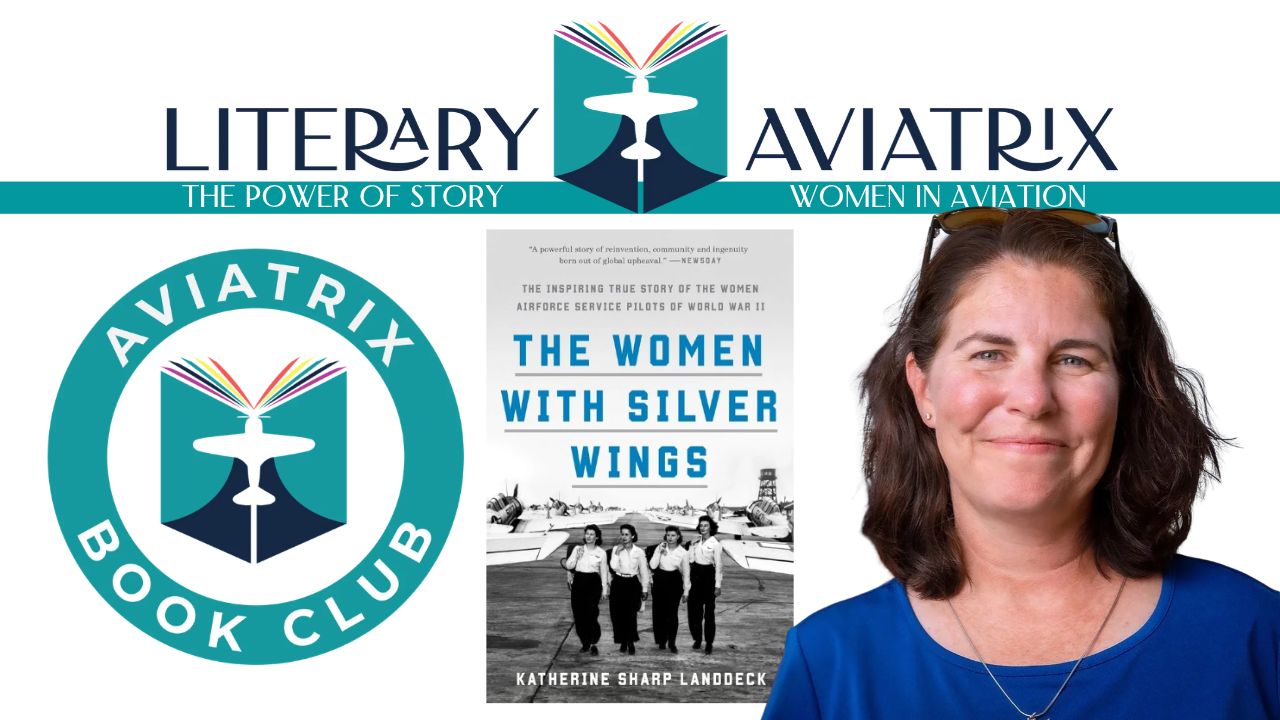
Buy The Women with Silver Wings
In 1993, Katherine Sharp Landdeck went to a biplane airshow in Bartlesville, Oklahoma, alone because none of her friends wanted to go with her. She struck up a conversation with legendary aircraft designer Curtis Pitts, who introduced her to aerobatic pilot Carol Bailey Bosca. When Kate learned that Carol had flown B-25s as a member of the Women Airforce Service Pilots (WASP) during World War II, she was astonished. She had never heard of the WASP.
Carol wrote her name and address on a little orange card and told Kate to write if she wanted to learn more. Kate carried that card from purse to purse, afraid she might lose it. By the time she drove home from the airshow, she knew she had found the subject she wanted to write about.
More than thirty years later, Dr. Katherine Sharp Landdeck is one of the foremost historians of the WASP and the author of The Women with Silver Wings: The Inspiring True Story of the Women Airforce Service Pilots of World War II. In this episode, I talk with Kate about the remarkable women who shaped her life, the decades she spent researching and writing their history, and the friendships that grew out of that work.
Kate began interviewing WASP in the 1990s, when many were still alive and eager to tell their stories. Over the years, she became much more than a historian documenting their experiences. She became a trusted friend, an advocate, and, in many cases, an honorary member of their families. Women like Teresa James, Dora Dougherty Strother, Marty Wyall, Vi Cowden, and Elaine Harmon helped Kate understand not only what they had accomplished during the war, but what happened to them afterward, when the country that had needed their skills abruptly sent them home.
We talk about how those relationships transformed Kate’s approach to writing history. She actually discarded an entire academic manuscript and started over because she wanted readers to know these women as people, not simply as names and accomplishments in the historical record. She learned to ask different questions, to look more closely at photographs and film, and to pay attention to the small details that bring a life into focus.
We also explore the WASP’s long fight for recognition, from their disbandment in December 1944 to their eventual recognition as veterans, the Congressional Gold Medal, and the effort to secure Elaine Harmon’s right to be buried at Arlington National Cemetery. Kate was involved in many of those efforts, and her stories offer an extraordinary perspective on the decades of advocacy required to secure recognition for women whose service should never have been in question.
And then there is the story of the book itself. After decades of research, revisions, and persistence, The Women with Silver Wings was finally scheduled for publication in April 2020. Kate had a national book tour planned, a Hollywood adaptation in development, and years of anticipation behind her. Then the pandemic arrived. We talk about the disappointment of that moment, the unexpected ways Kate continued sharing the WASP story, and the enduring life of a book that is now in its seventh printing.
Perhaps the most moving part of our conversation is Kate’s reflection on loving and losing the women who entrusted her with their stories. She has spent much of her adult life surrounded by women several generations older than herself, and she has had to say goodbye to nearly all of them. But the friendships, the lessons, and the responsibility to carry their stories forward remain.
We also talk about why women’s aviation history matters now, particularly at a moment when women’s contributions and opportunities are once again being challenged. The WASP story is inspiring, but it is also a reminder that progress is neither inevitable nor permanent.
This conversation is especially meaningful to me as I work on my own history of women in aviation. Kate has been extraordinarily generous with her knowledge, encouragement, and friendship, and I am grateful to share some of that with you.
Watch or listen to our conversation, and if you haven’t yet read The Women with Silver Wings, I hope you’ll pick up a copy. These women have so much more to teach us.