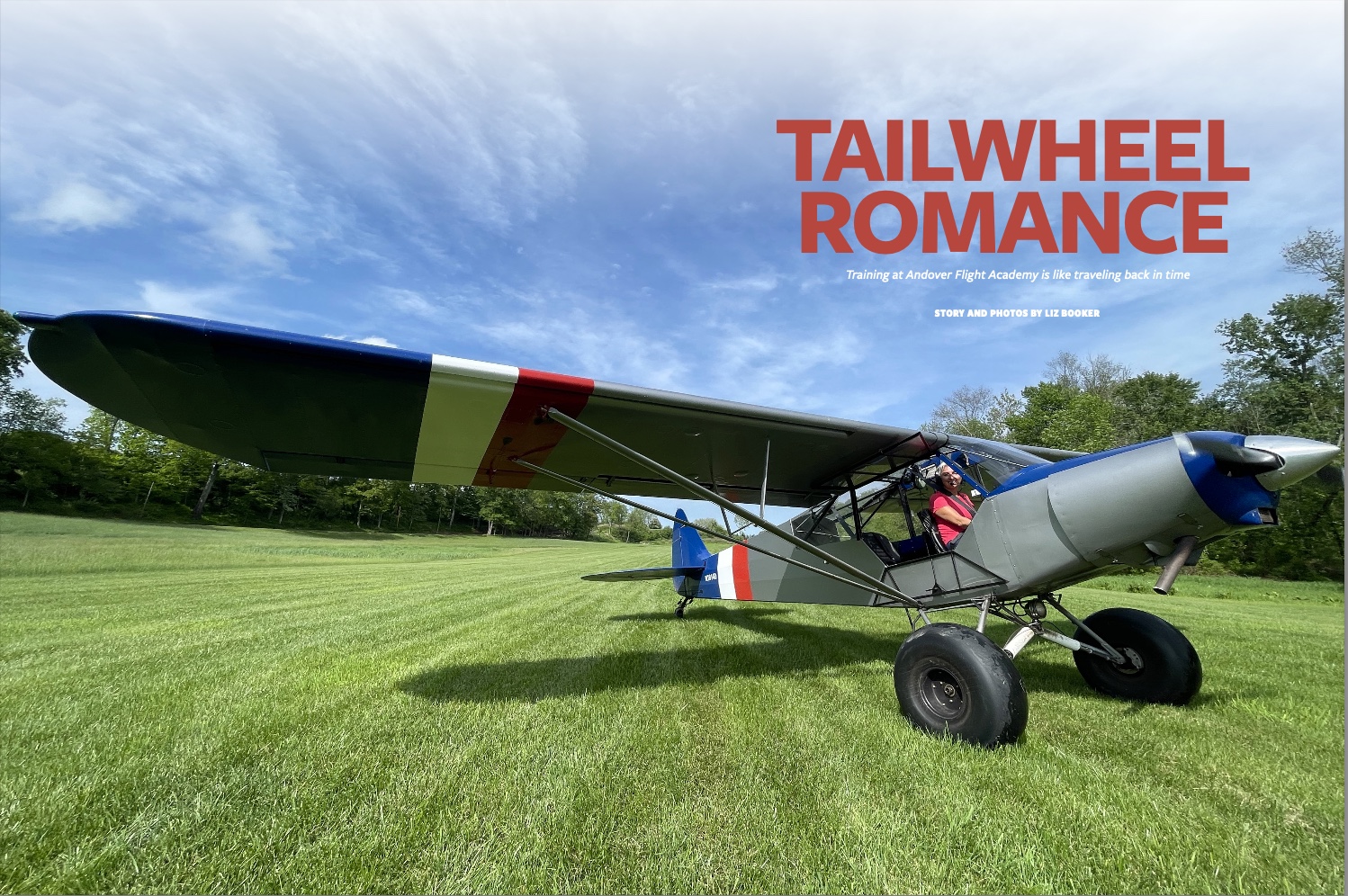
Tailwheel Romance (Plane & Pilot Oct 2025)
This article was published in the October issue of Plane & Pilot Magazine. Below is my unedited submission with Damian’s and Justine’s first names. Scroll down for more pictures.
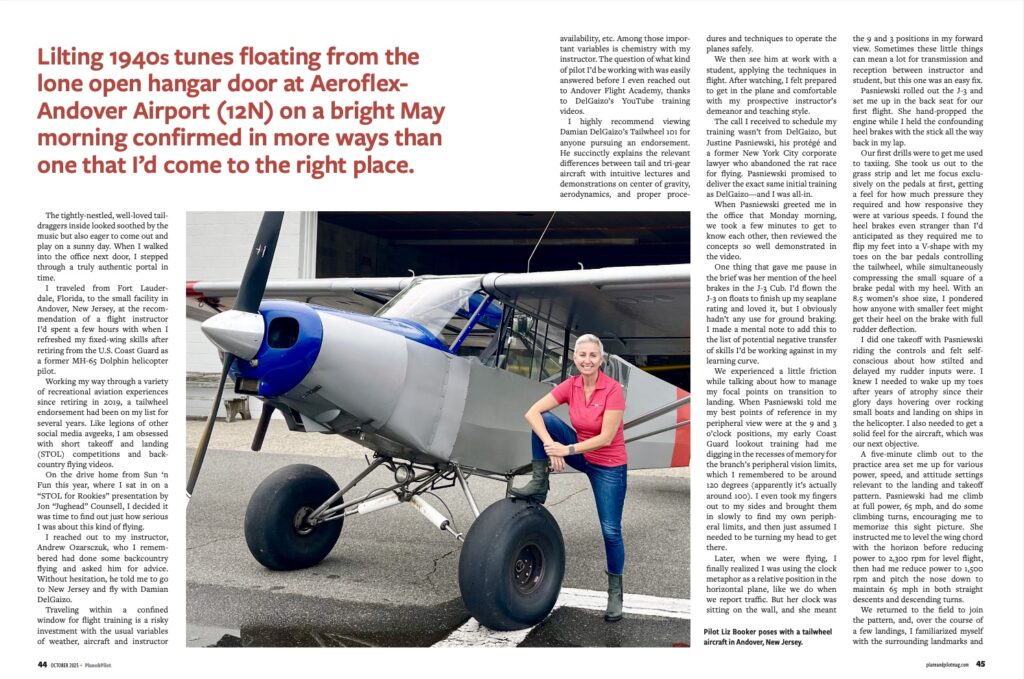
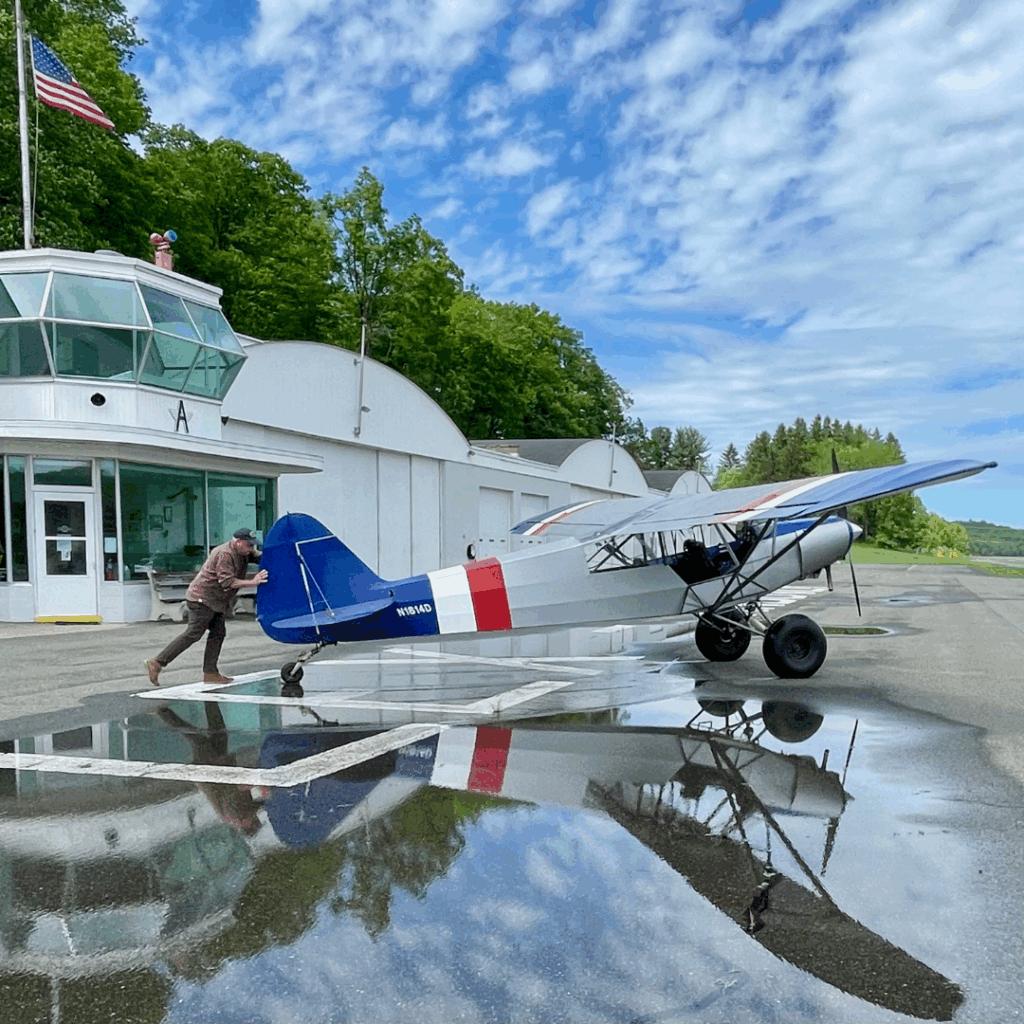
Lilting 1940’s tunes floating from the lone open hangar door at Aeroflex-Andover Airport 12N on a bright May morning confirmed in more ways than one that I’d come to the right place. The tightly nestled, well-loved taildraggers inside looked soothed by the music but also eager to come out and play on a sunny day. When I walked into the office next door, I stepped through a truly authentic portal in time.
I traveled from Fort Lauderdale to New Jersey at the recommendation of a flight instructor I’d spent a few hours with when I refreshed my fixed wing skills after retiring from the Coast Guard as a former MH65 (AS365) Dolphin helicopter pilot. Working my way through a variety of recreational aviation experiences since retiring in 2019, a tailwheel endorsement was on my list for several years. Like legions of other social media avgeeks, I am obsessed with Short Takeoff and Landing (STOL) competitions and backcountry flying videos. On the drive home from SUN ‘n FUN 2025, where I sat in on a “STOL for Rookies” presentation by Jon ‘Jughead’ Counsell, I decided it was time to find out just how serious I was about this kind of flying.
I reached out to my instructor, Andrew Osarsczuk, who I remembered had done some backcountry flying and asked him for advice. Without hesitation, he told me to go to New Jersey and fly with Damian Delgaizo. Traveling within a confined window for flight training is a risky investment with the usual variables of weather, aircraft and instructor availability, etc. And among those important variables is chemistry with my instructor. The question of what kind of pilot I’d be working with was easily answered before I even reached out to the school, thanks to Damian’s training videos on YouTube.
I highly recommend Damian Delgaizo’s Tailwheel 101 for anyone pursuing an endorsement. He succinctly explains the relevant differences between tail and tri-gear aircraft with intuitive lectures and demonstrations on center of gravity, aerodynamics, and the proper procedures and techniques to operate the planes safely. We then see him at work with a student, applying the techniques in flight. After watching, I felt prepared to get in the plane, and comfortable with my prospective instructor’s demeanor and teaching style.
The call I received to schedule my training wasn’t from Damian, but Justine Pasniewski—his protégé—a former New York City corporate lawyer who abandoned the rat race for flying. She promised to deliver the exact same initial training as Damian, and I was all in.
When she greeted me in the office that Monday morning, we took a few minutes to get to know each other, then reviewed the concepts so well-demonstrated in the video. One thing that gave me pause in the brief was her mention of the heel brakes in the J-3 Cub. I’d flown the J-3 on floats to finish up my seaplane rating and loved it, but I obviously hadn’t any use for ground-braking. I made a mental note to add this to the list of potential negative transfer of skills I’d be working against in my learning curve.
We experienced a little dissonance while talking about how to manage my focal points on transition to landing. When she told me my best points of reference in my peripheral view were at the nine and three o’clock positions, my early Coast Guard lookout training had me digging in the recesses of memory for our peripheral vision limits, which I remembered to be around 120 degrees (apparently it’s actually around 100). I even took my fingers out to my sides and brought them in slowly to find my own peripheral limits, and then just assumed I needed to be turning my head to get there. Later, when we were flying, I finally realized I was using the clock metaphor as a relative position in the horizontal plane, like we do when we report traffic, but her clock was sitting on the wall, and she meant the nine and three positions in my forward view. Sometimes these little things can mean a lot for transmission and reception between instructor and student, but this one was an easy fix.
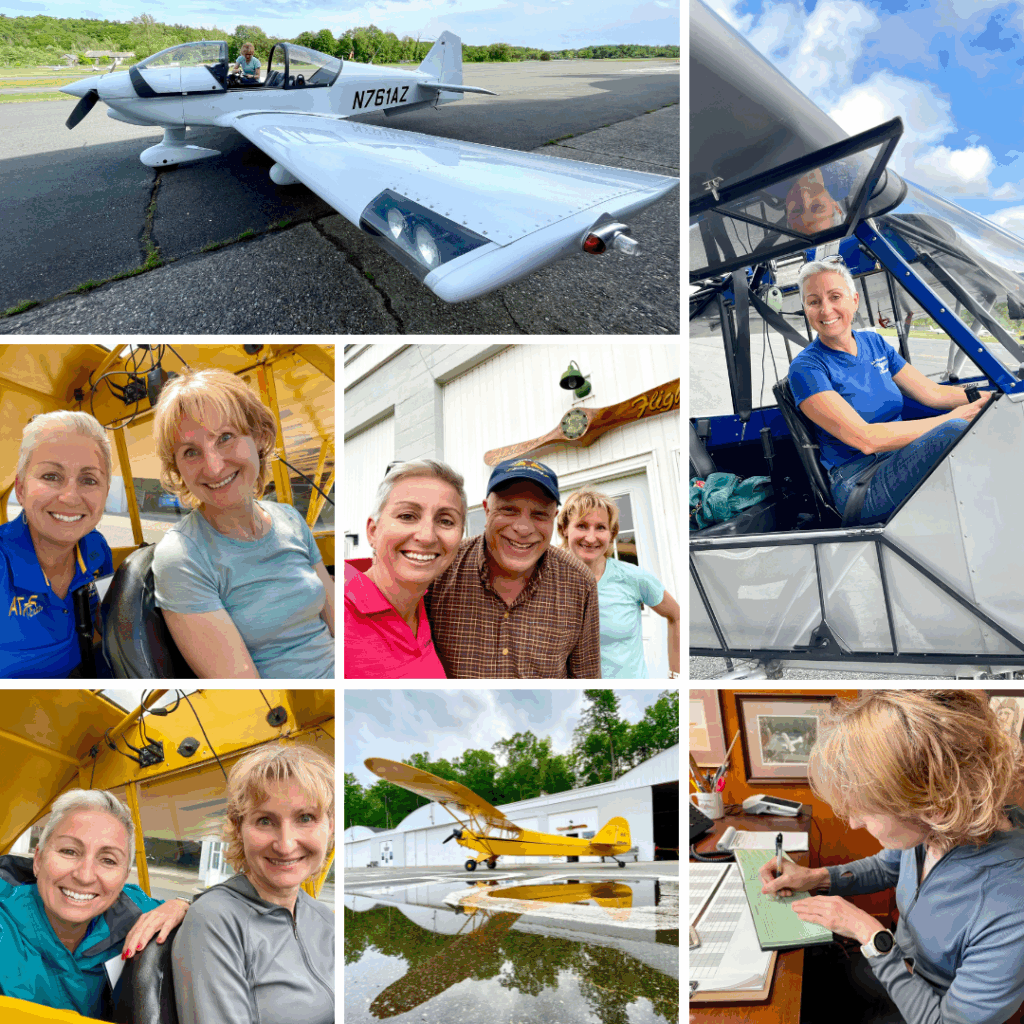
Justine rolled out the J-3 and set me up in the back seat for our first flight. She hand-propped the engine while I held the confounding heel brakes with the stick all the way back in my lap. Our first drills were to get me used to taxiing. She took us out to the grass strip and let me focus exclusively on the pedals at first, getting a feel for how much pressure they required, and how responsive they were at various speeds. I found the heel brakes even stranger than I’d anticipated as they required me to flip my feet into a V-shape with my toes on the bar-pedals controlling the tailwheel, while simultaneously compressing the small square of a brake pedal with my heel. With an 8.5 women’s shoe size I pondered how anyone with smaller feet might get their heel on the brake with full rudder deflection.
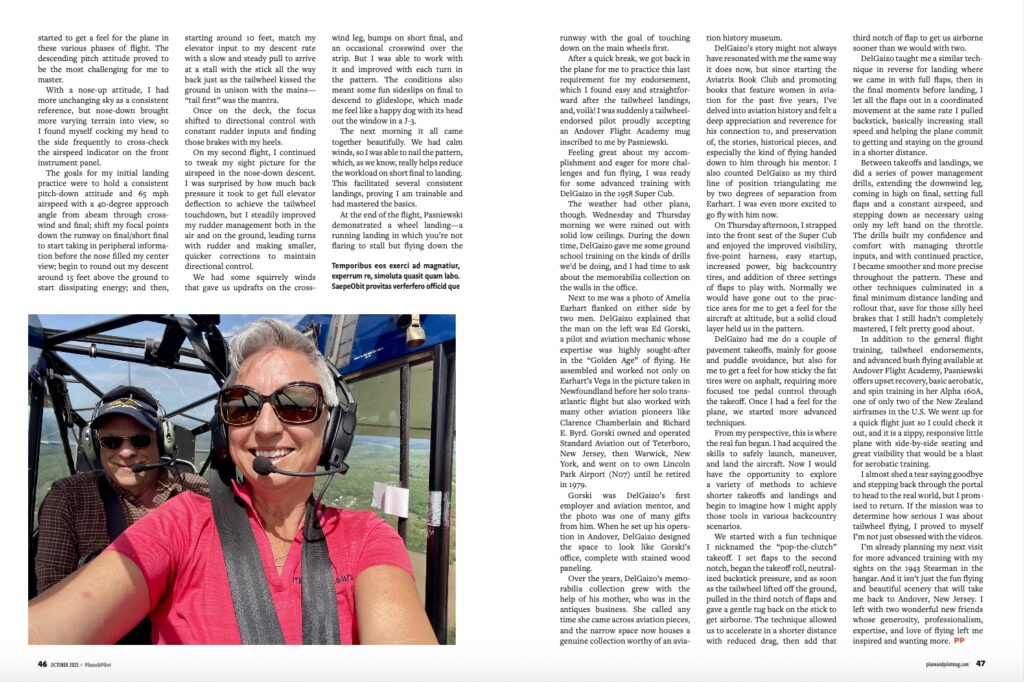
I did one takeoff with Justine riding the controls and felt self-conscious about how stilted and delayed my rudder inputs were. I knew I needed to wake my toes up after years of atrophy since their glory days hovering over rocking small boats and landing on ships in the helicopter. I also needed to get a solid feel for the aircraft, which was our next objective.
A five-minute climb out to the practice area set me up for various power, speed, and attitude settings relevant to the landing and takeoff pattern. Justine had me climb at full power, 65 miles per hour, and do some climbing turns, encouraging me to memorize this sight picture. She instructed me to level the wing chord with the horizon before reducing power to 2300 rpm for level flight, then had me reduce power to 1500 rpm and pitch the nose down to maintain 65 mph in both straight descents and descending turns.
We returned to the field to join the pattern, and, over the course of a few landings, I familiarized myself with the surrounding landmarks and started to get a feel for the plane in these various phases of flight. The descending pitch attitude proved to be the most challenging for me to master. With a nose-up attitude, I had more unchanging sky as a consistent reference, but nose-down brought more varying terrain into view, so I found myself cocking my head to the side frequently to crosscheck the airspeed indicator on the front instrument panel.
The goals for my initial landing practice were to: hold a consistent pitch-down attitude and 65 mph airspeed with a 40 degree approach angle from abeam through crosswind and final; shift my focal points down the runway on final/short-final to start taking in peripheral information before the nose filled my center view; begin to round out my descent around 15 feet above the ground to start dissipating energy; and then, starting around ten feet, match my elevator input to my descent rate with a slow and steady pull to arrive at a stall with the stick all the way back just as the tailwheel kissed the ground in unison with the mains—‘tail first’ was the mantra. Once on the deck, the focus shifted to directional control with constant rudder inputs and finding those brakes with my heels.
On my second flight, I continued to tweak my sight-picture for the airspeed in the nose-down descent. I was surprised by how much backpressure it took to get full elevator deflection to achieve the tailwheel touchdown, but I steadily improved my rudder management both in the air and on the ground, leading turns with rudder and making smaller, quicker corrections to maintain directional control. We had some squirrely winds that gave us updrafts on the crosswind leg, bumps on short final and an occasional crosswind over the strip, but I was able to work with it and improved with each turn in the pattern. The conditions also meant some fun sideslips on final to descend to glideslope, which make me feel like a happy dog with her head out the window in a J-3.
The next morning it all came together beautifully. We had calm winds, so I was able to nail the pattern, which, as we know, really helps reduce the workload on short-final to landing. This facilitated several consistent landings, proving I am trainable and had mastered the basics. At the end of the flight, Justine demonstrated a ‘wheel’ landing—a running landing in which you’re not flaring to stall but flying down the runway with the goal of touching down on the main wheels first. After a quick break, we got back in the plane for me to practice this last requirement for my endorsement, which I found easy and straightforward after the tailwheel landings, and, voilà! I was suddenly a tailwheel endorsed pilot proudly accepting an Andover Flight Academy mug inscribed to me by Justine.
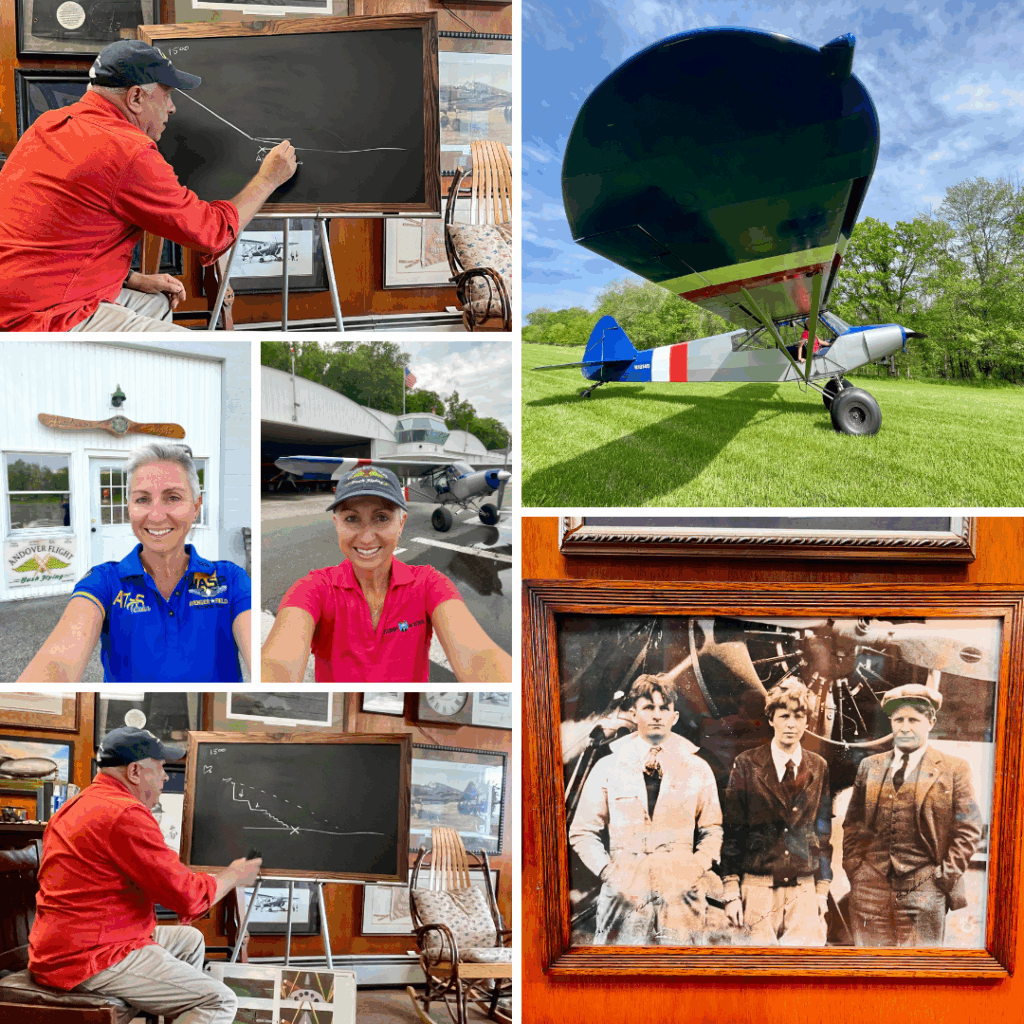
Feeling great about my accomplishment and eager for more challenges and fun flying, I was ready for some advanced training with Damian in the 1958 Super Cub. The weather had other plans, though. Wednesday and Thursday morning we were rained out with solid low ceilings. During the down time, Damian gave me some ground school training on the kinds of drills we’d be doing, and I had time to ask about the memorabilia collection on the walls surrounding us in the office.
Next to me was a photo of Amelia Earhart flanked on either side by two men. Damian explained the man on the left was Ed Gorski, a pilot and aviation mechanic whose expertise was highly sought after in the ‘Golden Age’ of flying. He assembled and worked not only on Amelia’s Vega in the picture taken in Newfoundland before her solo transatlantic flight but also worked with many other aviation pioneers like Clarence Chamberlain and Richard E. Byrd. Ed Gorski owned and operated Standard Aviation out of Teterboro, N.J. then Warwick, N.Y., and went on to own Lincoln Park Airport until he retired in 1979.
Ed was Damian’s first employer and aviation mentor, and the picture on the wall was one of many gifts from him. When he set up his operation in Andover, Damian designed the space to look like Ed’s office, complete with stained wood paneling. Over the years, Damian’s memorabilia collection grew with the help of his mother who was in the antiques business. She called any time she came across aviation pieces and the narrow space now houses a genuine aviation history museum collection.
Damian’s story might not always have resonated with me the same way it does now, but since starting the Aviatrix Book Club and promoting books that feature women in aviation for the past five years, I’ve delved into our history and felt a deep appreciation and reverence for his connection to, and preservation of the stories, the historical pieces, and especially the kind of flying handed down to him through this icon. I also counted Damian as my third line of position triangulating me by two degrees of separation from Amelia. I was even more excited to go fly with him now.
On Thursday afternoon, I strapped into the front seat of the Super Cub and enjoyed the improved visibility, five-point harness, easy startup, increased power, big backcountry tires, and the addition of three settings of flaps to play with. Normally we would have gone out to the practice area for me to get a feel for the aircraft at altitude, but a solid cloud layer held us in the pattern. Damian had me do a couple of pavement takeoffs, mainly for goose and puddle avoidance, but also for me to get a feel for how ‘sticky’ the fat tires were on asphalt, requiring more focused toe pedal control through the takeoff. Once I had a feel for the plane, we started more advanced techniques.
From my perspective, this is where the real fun began. I had acquired the skills to safely launch, maneuver, and land the aircraft. Now I would have the opportunity to explore a variety of methods to achieve shorter takeoffs and landings and begin to imagine how I might apply those tools in various backcountry scenarios.
We started with a fun technique I nicknamed the ‘pop the clutch’ takeoff. I set flaps to the second notch, began the takeoff roll, neutralized backstick pressure, and as soon as the tailwheel lifted off the ground, pulled in the third notch of flaps and gave a gentle tug back on the stick to get airborne. The technique allowed us to accelerate in a shorter distance with reduced drag, then add that third notch of flap to get us airborne sooner than we would with two.
He taught me a similar technique in reverse for landing where we came in with full flaps, then in the final moments before landing, I let all the flaps out in a coordinated movement at the same rate I pulled backstick, basically increasing stall speed and helping the plane commit to getting and staying on the ground in a shorter distance.
Between takeoffs and landings we did a series of power management drills, extending the downwind leg, coming in high on final, setting full flaps and a constant airspeed, and stepping down as necessary using only my left hand on the throttle. The drills built my confidence and comfort with managing throttle inputs, and with continued practice, I became smoother and more precise throughout the pattern. These and other techniques culminated in a final minimum distance landing and rollout that, save for those silly heel brakes which I still hadn’t completely mastered, I felt pretty good about.
In addition to the general flight training, tailwheel endorsements, and advanced bush flying available at Andover, Justine offers upset recovery, basic aerobatic, and spin training in her Alpha 160A, one of only two of the New Zealand airframes in the U.S. We went up for a quick flight just so I could check it out and it is a zippy, responsive little plane with side-by-side seating and great visibility that would be a blast for aerobatic training.
I almost shed a tear saying goodbye and stepping back through the portal to head to the ‘real world’, but I promised to return. If the mission was to determine how serious I was about tailwheel flying, I proved to myself I’m not just obsessed with the videos. I’m already planning my next visit for more advanced training with my sights on the 1943 Stearman in the hangar. And it isn’t just the fun flying and beautiful scenery that will take me back to Andover—I left with two wonderful new friends whose generosity, professionalism, expertise, and love of flying left me inspired and wanting more.
Bonus Recommendations: If you’re looking for a place to stay while you train with Damian and Justine, I highly recommend the Whistling Swan Inn in nearby Stanhope. While you’re there, walk down to Shakey Jakes for great food and refreshments, and don’t miss the live music at the Stanhope House down the block. Lake House Café in Andover was an easy stop for great coffee on the way to the airport, and A & B Bagels and Deli has the best authentic pastrami Rueben.