Aviatrix Classics – Woman and Flying by Lady Mary Heath
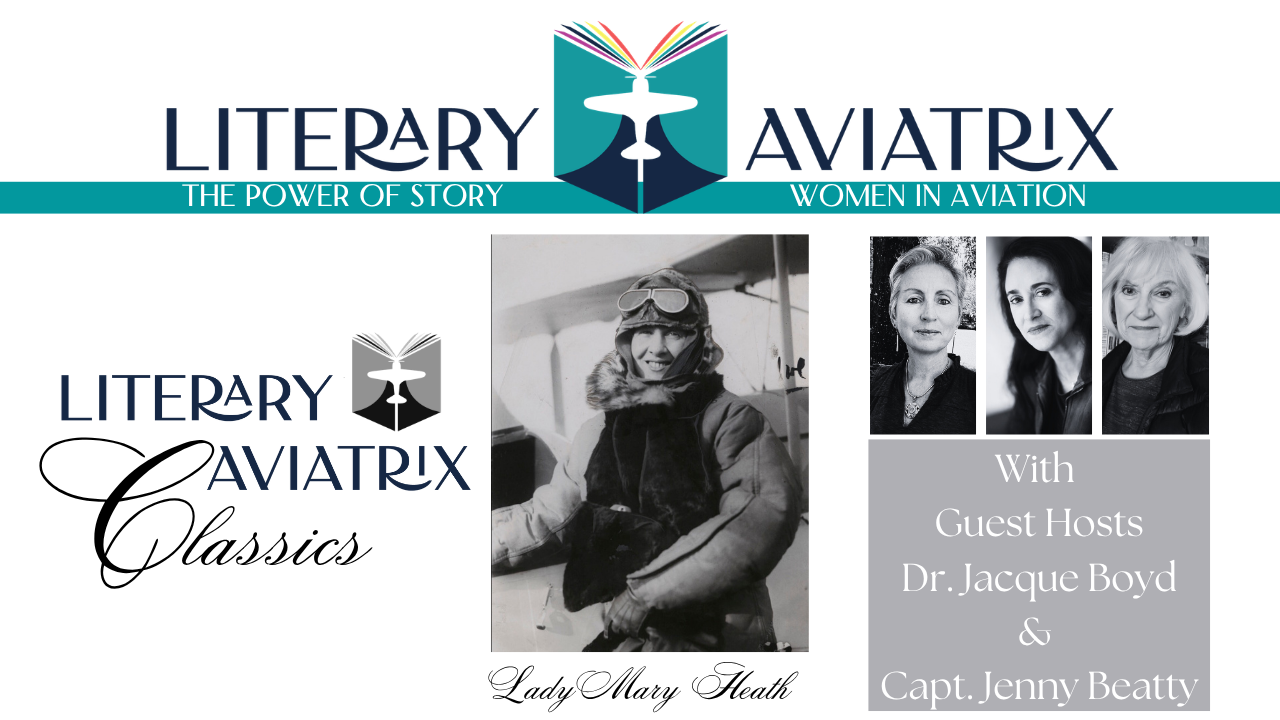
Lady Mary Heath
Listen to the Episode
Show notes
In 1925, when women were prohibited from obtaining commercial pilot licenses in Britain, Irish aviator Lady Mary Heath wrote a letter to the International Commission for Air Navigation challenging the medical assumptions being used to exclude them. She brought her expertise in physiology and women’s athletics to the argument, offered herself for scientific testing, and made a compelling case that women’s bodies were perfectly capable of meeting the demands of professional aviation.
In this installment of our Literary Aviatrix Classics series, I’m joined by Dr. Jacque Boyd and Captain Jenny Beatty to discuss Woman and Flying, by Lady Mary Heath and journalist Stella Wolfe Murray, with contributions from fellow aviator Lady Bailey, published in 1929.
We came to this book because Lady Heath kept appearing in the memoirs and histories we’ve been reading. She was a mentor to Elinor Smith, a contemporary of Amelia Earhart, an accomplished athlete, and a pioneering aviator who flew solo from Cape Town to England in 1928. But the more we learn about her, the more complicated and interesting she becomes.
We explore her difficult childhood, athletic achievements, marriages, aviation advocacy, spectacular flying adventures, and tragic later years. We also examine the book itself, which offers an intriguing window into the early days of commercial aviation, when flying was still a novelty and its advocates were working to persuade the public that it had a future.
There’s plenty to marvel at, including Lady Heath’s resourcefulness as a pilot and mechanic, her ingenious (if unsuccessful) attempt to improvise flotation equipment for a Mediterranean crossing, and the extraordinary collection of tools, spare parts, clothing, and personal possessions she carried across Africa.
We also wrestle with the attitudes embedded in the writing, particularly its colonial worldview, assumptions about class and privilege, and the ways women of the period understood their own roles in aviation.
And then there’s that letter.
For me, Lady Heath’s willingness to confront the people making decisions about women’s bodies and professional opportunities is among the most important things we discover in this book. Her argument is familiar, and our discussion leads to a larger conversation about the importance of women speaking openly about their experiences, challenging institutional assumptions, and preserving the stories that don’t always make it into the official histories.
We also share recommendations for additional reading about Lady Heath, including Lindie Naughton’s biography Lady Icarus, and a recent historical fiction which I have since read and is very well written, The Sky is Not Enough, by June O’Sullivan. Look for it on the 2027 Aviatrix Book Club reading list.
A guide to Lady Mary’s long list of names:
Born Sophie Catherine Theresa Mary Peirce-Evans (1896–1939), she was also known as:
Lady Icarus — her famous nickname, particularly associated with her pioneering long-distance flights.
Sophie Peirce-Evans — her maiden name, sometimes written Pierce-Evans in historical sources.
Sophie Elliott-Lynn — her name following her first marriage to William Elliott-Lynn.
Lady Mary Heath — the name under which she became internationally famous as an aviator, following her marriage to Sir James Heath.
Mary, Lady Heath — a formal variation commonly used in contemporary publications and archival records.
Mary Heath — the shorter name appearing in aviation histories.
Mary Williams — her name following her third marriage to American aviator Jack Williams.